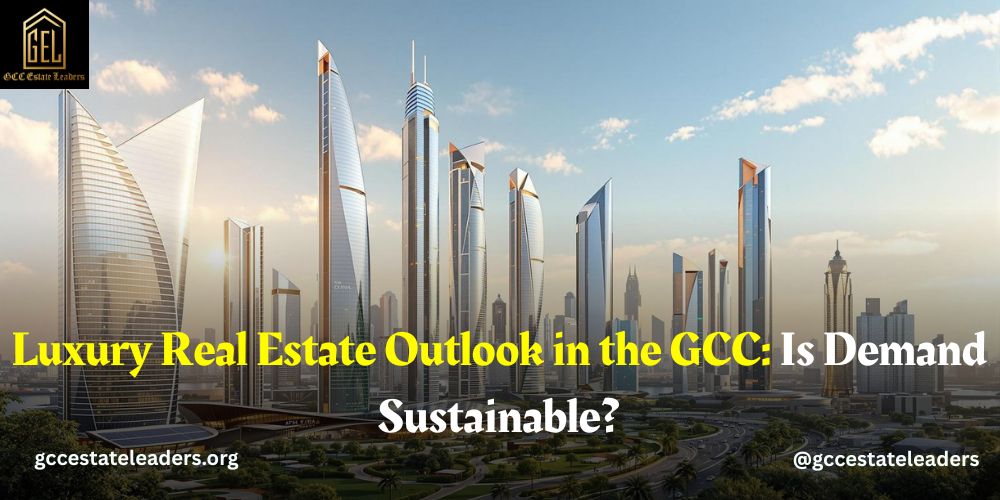
Luxury real estate across the GCC has recorded strong performance over recent years. High-value transactions, branded residences, and waterfront developments have become increasingly visible in market data and buyer conversations. While this growth has attracted global attention, it also raises a critical question for investors and developers alike: is luxury demand in the GCC sustainable, or is the market approaching a natural slowdown?
As 2025 approaches, the answer lies not in headline prices alone, but in buyer profiles, supply discipline, and the broader direction of capital across the region.
Understanding What “Luxury” Means in the GCC Context
Luxury real estate in the GCC is no longer defined solely by size or finish. Today, it includes location quality, lifestyle integration, privacy, services, and long-term brand association. Branded residences, resort-linked developments, and master-planned waterfront communities now dominate the premium segment.
This evolution matters because it shifts demand from speculative buyers to lifestyle-driven owners and long-term investors, an important factor when assessing sustainability.
Capital Flows Continue to Support the High-End Segment
Recent insights on GCC real estate investment in 2025 and where capital is flowing show that a meaningful share of regional and international capital continues to target premium assets. High-net-worth individuals are prioritizing real estate as a store of value, especially in politically stable and tax-efficient jurisdictions.
Rather than chasing rapid appreciation, many buyers are allocating capital to luxury homes for long-term use, wealth preservation, and portfolio balance. This behavior supports price stability more than speculative cycles of the past.
Buyer Profiles Have Changed
One of the strongest indicators of sustainability is the changing buyer mix. Luxury demand in the GCC is no longer dominated by short-term investors. Instead, it includes:
-
End-users relocating for business or lifestyle reasons
-
Family offices seeking stable asset allocation
-
Global entrepreneurs diversifying geographic exposure
-
Long-term residents upgrading within the market
This shift reduces volatility, as purchases are less sensitive to short-term price movements and interest rate cycles.
Supply Discipline Is a Key Variable
While demand remains strong, supply levels vary significantly by city and sub-market. Some areas have managed luxury supply carefully, focusing on quality and location rather than volume. Others risk dilution if premium branding is overused without delivering true differentiation.
This is where selective analysis becomes critical. As highlighted in the UAE vs Saudi Arabia GCC property outlook comparison for investors, market maturity plays a role. Established cities tend to absorb luxury inventory more predictably, while emerging locations may experience uneven absorption until demand deepens.
Price Growth vs. Price Stability
Luxury property prices across the GCC have risen sharply in recent cycles, prompting questions about future growth. Insights from whether GCC property prices will continue rising in 2025–2026 suggest that the next phase is likely to favor stability over rapid appreciation.
For luxury assets, this is not a negative signal. Stable pricing supports long-term confidence and reduces the risk of abrupt corrections. Investors focused on capital preservation often prefer steady performance over aggressive growth.
Foreign Buyers Still Play a Critical Role
International demand remains a cornerstone of the GCC luxury market. High-end properties often appeal to overseas buyers seeking second homes, relocation options, or long-term holdings in globally connected cities.
According to the GCC property outlook for foreign investors, clarity around ownership rights, residency frameworks, and transaction processes continues to influence buying decisions. Markets that offer transparency and legal certainty are better positioned to sustain foreign demand in the luxury segment.
Lifestyle Infrastructure Matters More Than Ever
Luxury buyers today evaluate more than the property itself. Access to schools, healthcare, dining, beaches, marinas, and cultural venues all influence purchase decisions. Developments integrated into well-planned communities tend to retain value better than standalone luxury towers.
This focus on livability helps insulate premium markets from sudden demand drops, especially among owner-occupiers.
Risks That Could Affect Sustainability
Despite positive fundamentals, risks remain. Oversupply in select locations, overpricing driven by short-term hype, and global economic slowdowns could affect transaction volumes.
Luxury real estate is also more sensitive to geopolitical sentiment and global wealth cycles. While the GCC has benefited from increased global interest, maintaining confidence requires continued regulatory clarity and infrastructure delivery.
What the Outlook Suggests
Luxury real estate demand in the GCC appears structurally stronger than in previous cycles. The combination of diversified buyers, long-term capital, controlled supply in key areas, and lifestyle-driven demand supports sustainability rather than speculation.
However, performance will vary by project, location, and execution quality. The market is becoming more discerning, rewarding well-positioned assets while penalizing generic or poorly timed developments.
Final Thoughts
The GCC luxury real estate market is no longer driven by momentum alone. Its current strength is rooted in deeper fundamentals – capital discipline, buyer quality, and long-term regional vision.
Demand may not grow at the same pace indefinitely, but signs point toward a more balanced, mature phase rather than a sharp reversal. For investors and end-users alike, sustainability will depend on selectivity, realism, and a long-term view.