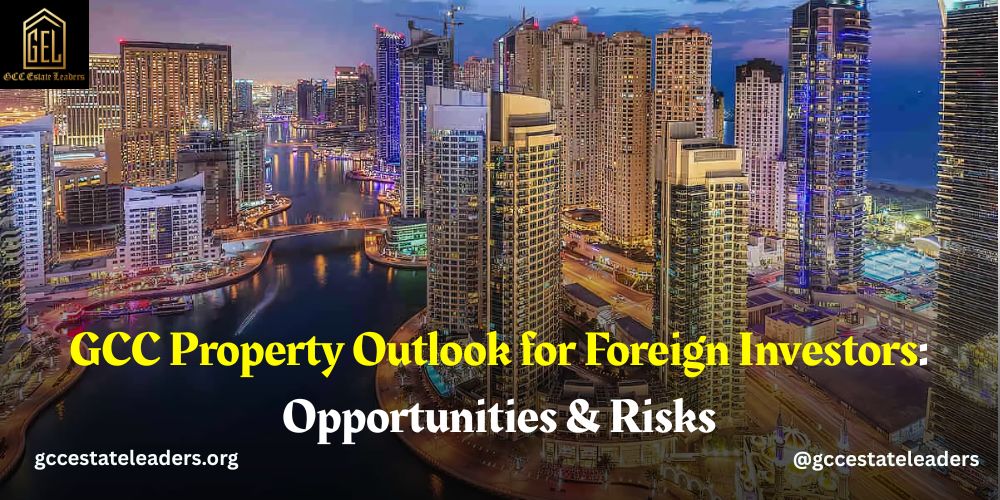
The Gulf Cooperation Council (GCC) has steadily positioned itself as a serious destination for international real estate capital. Over the past decade, foreign investors have moved beyond viewing the region as a short-term play and are now treating GCC property markets as part of long-term portfolio planning.
As 2025 approaches, interest from overseas buyers continues to grow, but so does the need for clarity. While the region offers strong opportunities, it also presents market-specific risks that foreign investors must understand before committing capital.
This outlook examines where opportunities exist, what risks need careful management, and how global investors are approaching GCC real estate today.
Why the GCC Continues to Attract Foreign Capital
Foreign investors are drawn to the GCC for several structural reasons. Population growth, government-led infrastructure investment, tax-friendly frameworks, and expanding residency options have all contributed to stronger demand.
Recent analysis on GCC real estate outlook for 2025 highlights how the region has remained resilient despite global economic uncertainty. While other markets faced sharp corrections, many GCC cities experienced price stability, rising rental demand, and continued transaction activity.
This resilience has helped reinforce the GCC’s reputation as a comparatively defensive real estate market during volatile global cycles.
Key Markets Foreign Investors Are Watching
Not all GCC markets operate in the same way. International buyers tend to focus on locations that offer clear ownership rights, liquidity, and rental demand.
Saudi Arabia has become a focal point following policy shifts that expanded access for overseas buyers. Recent changes around foreign real estate ownership in Saudi Arabia have opened new residential and mixed-use opportunities, particularly in major urban and economic zones. While the market is still developing its resale depth, long-term confidence has increased.
The UAE remains a mature destination, especially for investors seeking rental income, branded residences, and regulated off-plan projects. Other GCC markets continue to attract niche interest, often tied to infrastructure expansion or tourism, leading to development.
Opportunities for Foreign Investors in GCC Property
1. Regulatory Evolution
One of the biggest opportunities lies in regulatory progress. Several GCC countries have worked to clarify ownership laws, escrow systems, and buyer protections. This has reduced entry barriers and increased investor confidence.
Clearer frameworks make it easier for overseas buyers to assess risk and compare opportunities across cities and countries.
2. Long-Term Urban Development
Large-scale urban projects continue to shape the region’s property landscape. Mega developments tied to economic diversification, tourism, and transport connectivity are creating new investment zones.
Insights from how GCC investors are looking beyond borders for real estate show that regional capital is also flowing into these long-horizon projects, often alongside international partners. This alignment of local and foreign capital strengthens market credibility.
3. Rental Demand and Population Growth
Foreign investors often prioritize rental income. In many GCC cities, population growth driven by employment opportunities continues to support residential leasing demand.
Markets with diversified job creation and lifestyle infrastructure tend to show more stable rental performance, reducing vacancy risk for overseas owners.
4. Technology-Driven Transparency
The rise of digital platforms, virtual viewings, and data-driven pricing tools has made cross-border investing more practical. According to insights from top PropTech trends transforming real estate in the GCC, technology is improving transaction transparency and enabling remote ownership management.
For international investors, this reduces reliance on intermediaries and allows better decision-making from abroad.
Risks Foreign Investors Need to Manage Carefully
While the opportunities are clear, foreign investors should not underestimate the risks involved.
1. Market Cycles and Pricing Expectations
Not all segments grow at the same pace. Some locations may experience price plateaus due to increased supply or affordability limits. Entering at inflated pricing levels can restrict future returns.
Understanding where a market sits within its cycle is critical, especially for buyers unfamiliar with local dynamics.
2. Regulatory Differences Across Countries
Ownership rights, visa incentives, and resale rules vary across the GCC. What applies in one country or city may not apply in another.
Foreign investors must review title structures, lease terms, and exit options carefully before committing funds.
3. Developer and Project Risk
Off-plan opportunities can offer attractive pricing, but they also carry completion and delivery risk. Overseas buyers should evaluate developer track records, escrow safeguards, and realistic timelines.
This is particularly important in emerging areas where project density is increasing rapidly.
4. Currency and Liquidity Exposure
While many GCC currencies are pegged, foreign investors still face currency exposure relative to their home markets. Liquidity can also vary by project type and location, affecting resale timelines.
Having a clear holding strategy helps reduce pressure during market fluctuations.
How Foreign Investors Are Adjusting Their Strategies
The profile of the international GCC investor has evolved. Instead of chasing short-term appreciation, many are now focused on asset quality, rental fundamentals, and long-term visibility.
Diversification across cities or even countries within the region is becoming more common. Investors are also paying closer attention to infrastructure plans, population growth trends, and developer credibility.
This shift reflects a more disciplined approach, one that prioritizes stability over speculation.
What the Outlook Suggests for 2025 and Beyond
Looking ahead, the GCC remains well-positioned to attract foreign real estate capital, particularly from investors seeking exposure outside traditional Western markets.
As discussed in GCC real estate outlook for 2025, the region’s strength lies in its ability to combine growth with relative stability. However, success for foreign investors will depend on careful market selection, realistic expectations, and disciplined due diligence.
Opportunities exist, but they reward preparation, not impulse.
Final Thoughts
The GCC offers foreign investors a unique mix of opportunity and complexity. Strong fundamentals, regulatory progress, and long-term development plans continue to support demand. At the same time, market differences and project-specific risks require thoughtful evaluation.
For international buyers willing to take a measured approach, GCC real estate remains a compelling option within a diversified global portfolio.